A GHRH analog approved for a defined indication in HIV, studied in the context of visceral fat and the GH/IGF-1 axis
Overview
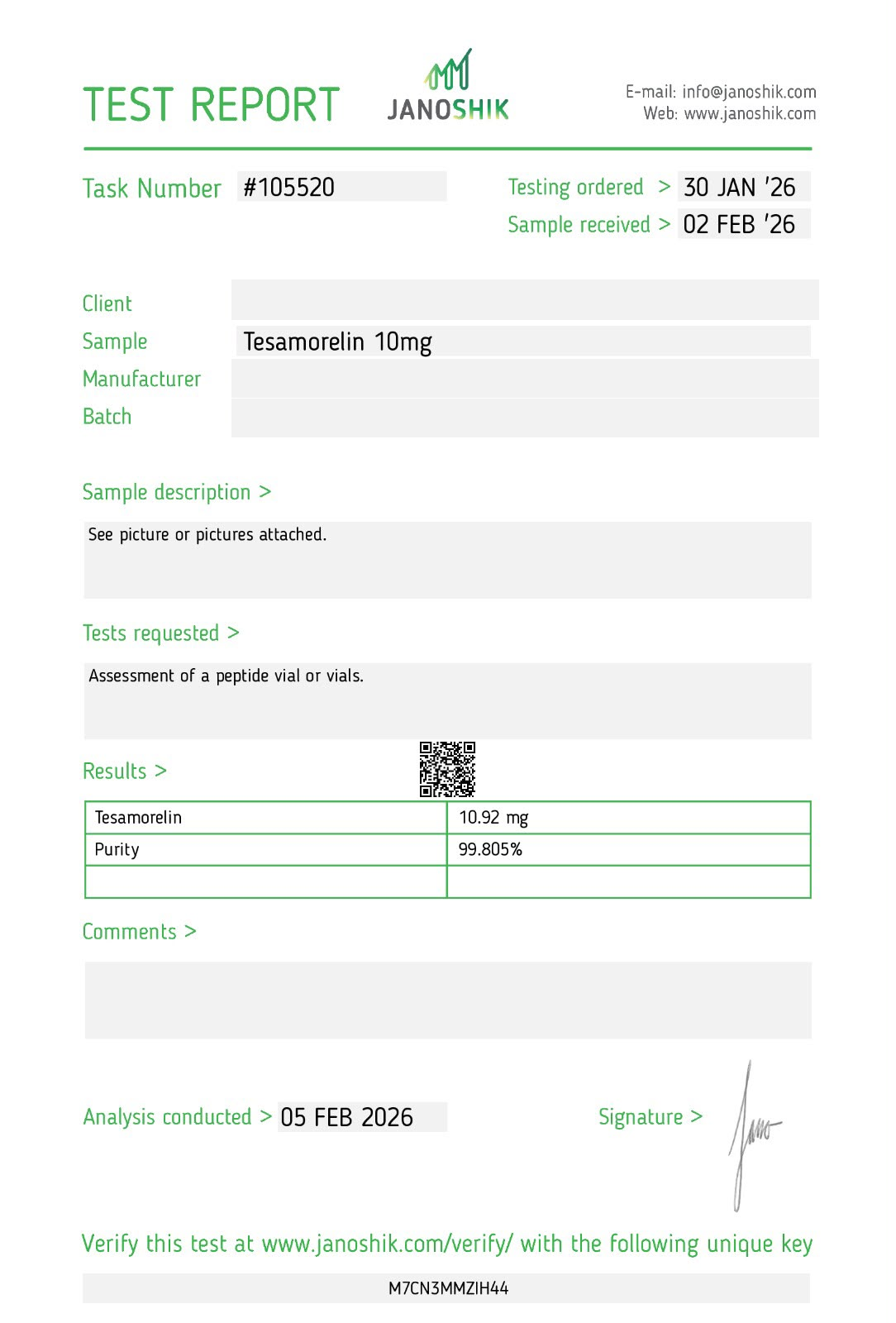
Tesamorelin is a synthetic analog of growth hormone-releasing hormone (GHRH), the hypothalamic hormone that signals the pituitary gland to release growth hormone. Unlike many research peptides, Tesamorelin is the active substance in an FDA-approved drug: EGRIFTA, first approved in the United States in 2010 to reduce excess abdominal fat in adult HIV patients with lipodystrophy [1]. The regulatory significance is important. Tesamorelin is not approved as a general weight-loss drug, and its indication is not "weight reduction" in a population without HIV. The updated FDA label also explicitly states that it is not intended for weight management, and that long-term cardiovascular safety has not been established [1]. From a research standpoint, Tesamorelin has a broader human evidence base than CJC-1295 or other investigational GH secretagogues, because phase 3 trials and clinical follow-up were conducted in the target population [2-5].
Biological Mechanism
Tesamorelin binds to the GHRH receptor in the pituitary and increases endogenous secretion of growth hormone. The rise in GH leads, among other things, to a rise in IGF-1, a central mediator of some of the effects of growth hormone on metabolism, adipose tissue, and other tissues [1,2]. The mechanism differs from external GH administration. A GHRH analog acts through the pituitary and depends on the ability of the hypothalamic-pituitary axis to respond. However, even endogenous stimulation is not necessarily entirely "physiological," because it involves pharmacological exposure that can raise GH/IGF-1 axis activity above baseline. The effect on adipose tissue appears especially pronounced in visceral fat. Studies in people with HIV and lipodystrophy showed a reduction in intra-abdominal fat, while the effect on subcutaneous fat was different and sometimes smaller [2-4].
Research Evidence
In a multicenter trial published in the New England Journal of Medicine, Tesamorelin reduced visceral fat in HIV patients with abdominal fat accumulation and improved some blood lipid measures [2]. Additional phase 3 trials and follow-up of up to about one year supported a reduction of approximately 15%-20% in visceral fat on average in the populations studied [3]. A randomized trial published in JAMA in 2014 also examined hepatic fat and found a reduction in visceral fat and in liver fat compared with placebo after six months, although the researchers emphasized that further studies are required to understand the long-term clinical significance [4]. In a 2024 study among people with HIV treated with integrase inhibitor-based regimens, a reduction in visceral fat and hepatic fat was again observed, without a significant worsening in glucose control compared with placebo in the group examined [5]. The data strengthen the metabolic effect in the target population, but do not automatically extend the indication to the general population.
Visceral Fat vs. Weight Loss
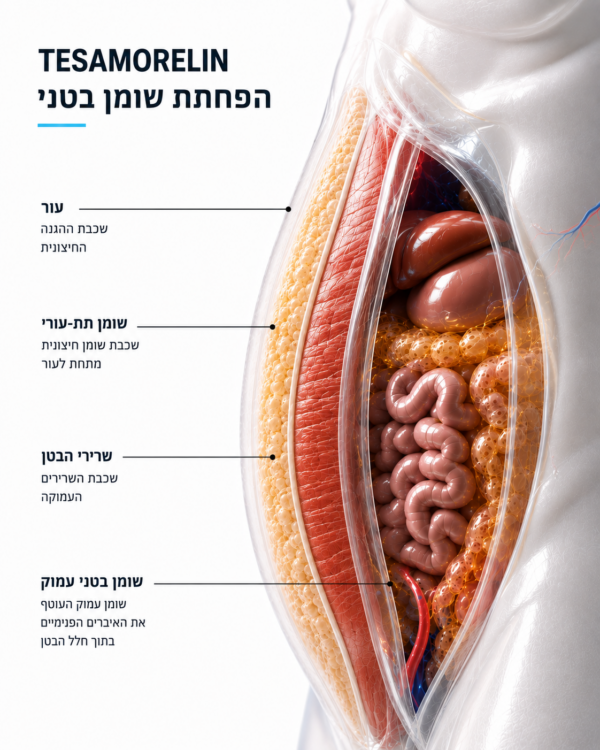
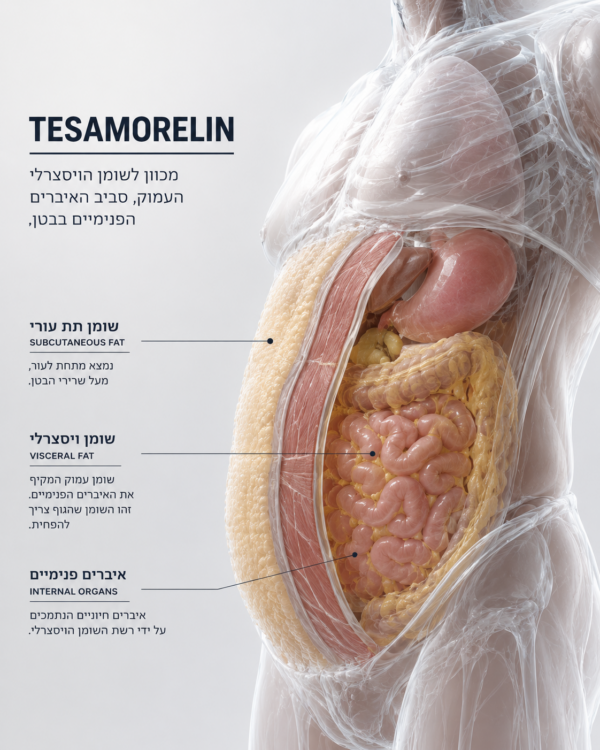
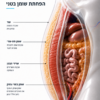
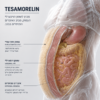
One of the most important points in interpreting Tesamorelin is the difference between a change in fat composition and a reduction in total weight. The goal of the approved treatment is to reduce excess abdominal fat associated with lipodystrophy in HIV, and not general treatment of obesity [1]. Visceral fat is located within the abdominal cavity around internal organs and is metabolically different from subcutaneous fat. A reduction in visceral fat can therefore occur even without a large change in total weight. This is also why MRI/CT measures or body circumference and composition may be more meaningful than a number on the scale alone in studies of this kind. This distinction prevents a mistaken marketing interpretation of Tesamorelin as a "weight-loss peptide." The strongest evidence relates to a defined clinical population and to a specific adipose-tissue measure.
Safety & Regulation
The FDA label for EGRIFTA WR contains warnings regarding an increase in IGF-1, fluid retention, joint pain, carpal tunnel-like symptoms, glucose intolerance or diabetes, and hypersensitivity reactions [1]. In addition, there is a special reference to active or prior malignancies, because the GH/IGF-1 pathway is involved in cellular growth. The FDA notes that IGF-1 levels may rise during treatment and that the effects of a prolonged increase are not fully known. Long-term cardiovascular safety has also not been established [1]. Because this is a drug approved for a defined indication, a distinction must be made between the safety data of the approved product and unapproved products or compounded preparations. Approval of an active substance within a specific product does not make every product containing it equivalent in terms of quality, stability, or safety.
Drug Approval vs. Off-Label Uses
Tesamorelin illustrates well the difference between "a molecule with metabolic activity" and "a drug approved for every metabolic purpose." The approval is based on a defined population, outcomes, manufacturing quality, and safety program. It does not constitute approval for treating general obesity, for muscle building, for "anti-aging," or for performance enhancement. Studies on hepatic fat are likewise not equivalent to approval for treating fatty liver disease in any population. A clinical trial can show a positive signal on a particular measure, but extending an indication requires a dedicated development program and a separate benefit-risk assessment.
Summary
Tesamorelin is a GHRH analog with a relatively significant research and regulatory basis. It is approved in the US only for reducing excess abdominal fat in adult HIV patients with lipodystrophy — and not for general weight management [1]. Randomized studies examined changes in fat composition [2-5], but stimulating the GH/IGF-1 axis involves metabolic risks and long-term safety questions that require a medical framework. The material marketed here is intended for laboratory research only and not for human use.
Selected Research Sources
- U.S. Food and Drug Administration. EGRIFTA WR (tesamorelin) Prescribing Information. Revised 2025; initial U.S. approval 2010.
- Falutz J. et al. Metabolic effects of a growth hormone-releasing factor in patients with HIV. New England Journal of Medicine, 2007. PMID: 18057338
- Falutz J. et al. Effects of tesamorelin, a growth hormone-releasing factor, in HIV-infected patients with abdominal fat accumulation: randomized placebo-controlled trial with safety extension. Journal of Acquired Immune Deficiency Syndromes, 2010. PMID: 20101189
- Stanley T.L. et al. Effect of tesamorelin on visceral fat and liver fat in HIV-infected patients with abdominal fat accumulation: a randomized clinical trial. JAMA, 2014. PMID: 25038357
- Russo S.C. et al. Efficacy and safety of tesamorelin in people with HIV on integrase inhibitors. AIDS, 2024. PMID: 38905488
- Falutz J. et al. Effects of tesamorelin (TH9507) in HIV-infected patients with excess abdominal fat: pooled analysis of two multicenter phase 3 trials. Journal of Clinical Endocrinology & Metabolism, 2010. PMID: 20554713






Reviews
There are no reviews yet.