A copper peptide studied in the context of skin, tissue repair, the extracellular matrix and inflammatory regulation
Overview
GHK-Cu is a complex of a short tripeptide called GHK with a divalent copper ion. The GHK sequence consists of three amino acids: glycine, histidine and lysine. When the sequence binds copper, the resulting complex is also known in the literature as glycyl-L-histidyl-L-lysine-Cu2+, and in the world of dermatology and cosmetics as Copper Tripeptide-1 [1,2]. GHK was first identified in the 1970s as a component of human plasma with biological activity on cells. Its chemical sequence was later defined, and it was found to bind copper with relatively high affinity [1,2]. The scientific interest in it stems from the fact that it combines two important biological components: a short peptide with signaling activity, and copper, a trace element involved in enzymes related to collagen, elastin, antioxidants and tissue repair [3,6]. Most of the research on GHK-Cu concerns skin and connective tissue, but not only cosmetics. The peptide has been studied in the contexts of wound healing, fibroblast activity, collagen and glycosaminoglycan synthesis, inflammation regulation, extracellular matrix remodeling and the expression of genes related to tissue repair [4-8].
Biological Mechanism
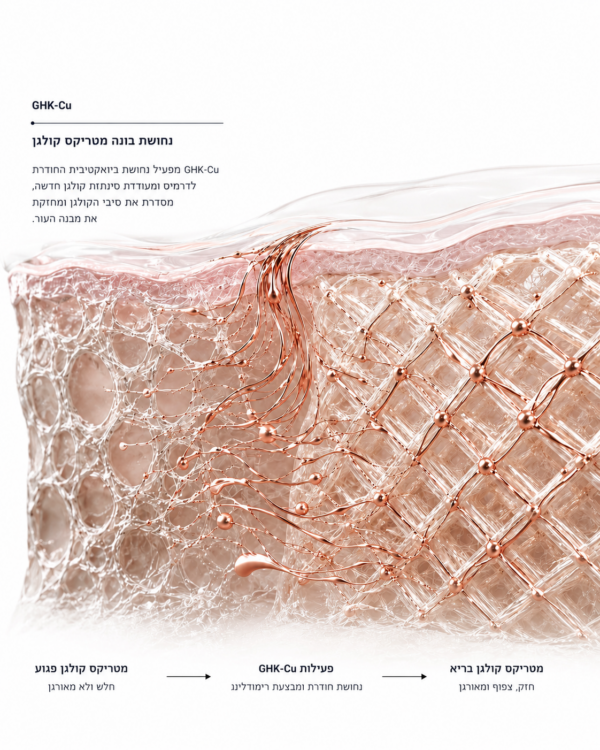
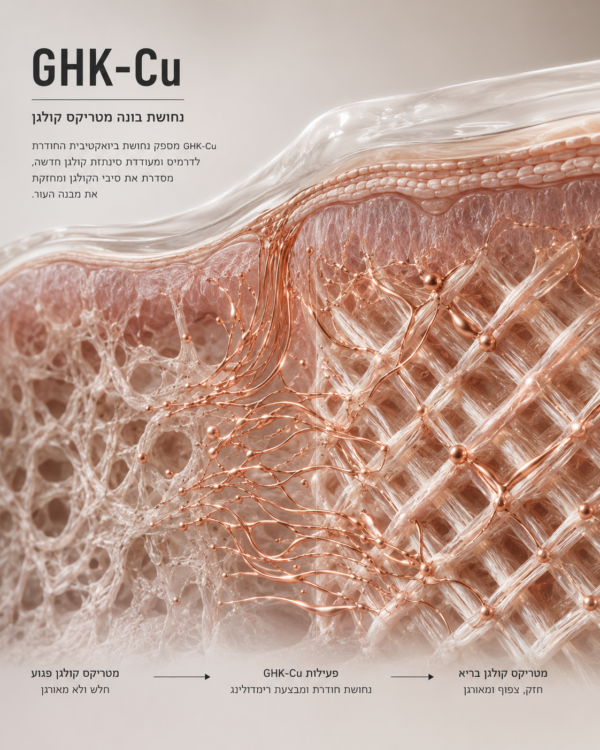
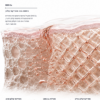
The extracellular matrix is a network of collagen, elastin, proteoglycans, glycosaminoglycans and other proteins that surrounds cells and supports tissue structure. In skin and connective tissue, the quality of the matrix is no less important than the amount of collagen itself. Proper healing requires the orderly breakdown of damaged tissue, cell migration, construction of a new matrix and reorganization of collagen fibers. In fibroblast cultures, GHK-Cu was found to increase collagen synthesis at low concentrations, without a parallel increase in cell number [4]. This finding points to a regulatory activity of the peptide on the cell, and not merely a general stimulation of the cell culture. Another study showed that GHK-Cu increases the synthesis of glycosaminoglycans, mainly dermatan sulfate and heparan sulfate, which are important components in the structure and function of the extracellular matrix [5]. Later reviews suggest that GHK-Cu also acts through a balance between the construction and breakdown of the matrix. It has been associated with changes in metalloproteinase activity, in metalloproteinase inhibitors, in the fibroblast response, and in pathways related to inflammation and oxidative stress [6,8]. Its activity therefore does not amount only to 'promoting collagen', but is related to a broader remodeling of tissue.
Research Evidence
In an animal study published in the Journal of Clinical Investigation, the effect of GHK-Cu on experimental wounds in rats was examined. The researchers reported that it promoted the accumulation of connective tissue in the wound area and changes in collagen and matrix measures [7]. Such findings support a possible role for GHK-Cu in the structural repair phase of tissue. In a 2012 Genome Medicine study, GHK was examined in the broader context of gene expression. The researchers identified a gene-expression signature associated with lung-tissue destruction in emphysema, and showed that GHK emerged as a molecule that could reverse part of these expression patterns in cellular and bioinformatic models [8]. The study does not prove treatment of lung disease, but it demonstrates that GHK may affect biological programs related to connective tissue, inflammation and repair. In the field of skin there are also small clinical studies and dermatological preparations, but a distinction must be made between GHK-Cu itself, other copper complexes and combined cosmetic formulations. A positive result with a particular preparation does not prove that every product containing Copper Tripeptide-1 acts in the same way or with the same potency.
The Difference Between Biological Activity and a Cosmetic Outcome
One of the challenges in interpreting the research on GHK-Cu is the transition from cellular measures to clinical measures. When a study demonstrates an increase in collagen synthesis in fibroblasts, this does not necessarily mean that the same effect will be obtained in living skin, because the skin has an epidermal barrier, blood flow, enzymatic degradation, immune responses and significant differences between formulations [4,9]. The level of evidence should therefore be read according to context: culture studies explain mechanism, animal studies point to healing potential, and small clinical studies examine the practical outcome of a particular preparation. Another important consideration is the difference between free copper and a peptide-copper complex. Free copper can participate in undesirable oxidation reactions, whereas binding to a peptide may change its availability and the way it is delivered to cells [3]. GHK-Cu is therefore not equivalent to a copper supplement or to general copper exposure. Its biological activity depends on the structure of the complex, its stability, concentration, chemical environment and its ability to reach the target tissue. In the genetic study on emphysema, GHK emerged as a molecule capable of affecting gene-expression signatures related to lung-tissue destruction, cytoskeletal organization and collagen remodeling [8]. This finding broadens interest in the peptide beyond the skin, but it also highlights the limitation of translation: a change in gene expression in cell culture is not a proven treatment for a chronic disease. The research value lies in the fact that GHK-Cu provides a model for understanding the relationship between short peptides, trace metals, the extracellular matrix and cellular repair programs. Dermatologically, the important question is not only whether GHK-Cu 'increases collagen', but whether it improves tissue quality over time. Proper remodeling includes collagen formation, breakdown of damaged collagen, fiber organization, inflammation regulation and support of glycosaminoglycans. A 2015 review suggests that GHK participates in several of these axes in parallel, including metalloproteinases and their inhibitors [6]. Describing it as a peptide related to matrix repair is therefore more accurate than a narrow description of it as an anti-aging ingredient.
Safety & Regulation
The safety context of GHK-Cu depends heavily on the route of exposure. A topical skin preparation is not equivalent to systemic exposure. In dermal formulations, pH, stability, permeability, carriers and other substances are also examined, not only the peptide itself. A pre-formulation study found that GHK-Cu is sensitive to degradation under certain conditions, so stability and manufacturing quality are a significant part of its evaluation [9]. The FDA notes that compounded injectable preparations containing GHK-Cu may raise concerns of immunogenicity, aggregation, peptide-related impurities and insufficient characterization of the active substance, and that there are limited human data for assessing safety by such routes of exposure [10]. The distinction between topical dermatological research and systemic exposure is therefore central.
Translation Limitations & Quality Metrics
When evaluating preparations containing GHK-Cu, the question of formulation must also be considered. A peptide that is stable in a test tube is not necessarily stable in a final product, and development studies have found that GHK-Cu is sensitive to conditions of pH, oxidation and hydrolytic degradation [9]. For the skin, penetration through the stratum corneum is also required, which is a particularly effective biological barrier. The same molecule can therefore show impressive activity in the laboratory but a variable result between different preparations. Another deeper point is the difference between young skin, aging skin and damaged skin. In aging tissue there are changes in fibroblasts, a decline in collagen quality, an increase in degradation enzymes, a decrease in water content and a change in low-grade chronic inflammation. GHK-Cu has been studied because it may affect several of these characteristics together [6,8]. However, in order to prove a stable clinical effect, studies are needed that measure not only external appearance but also dermal thickness, collagen organization, elasticity, barrier function and safety over time.
Summary
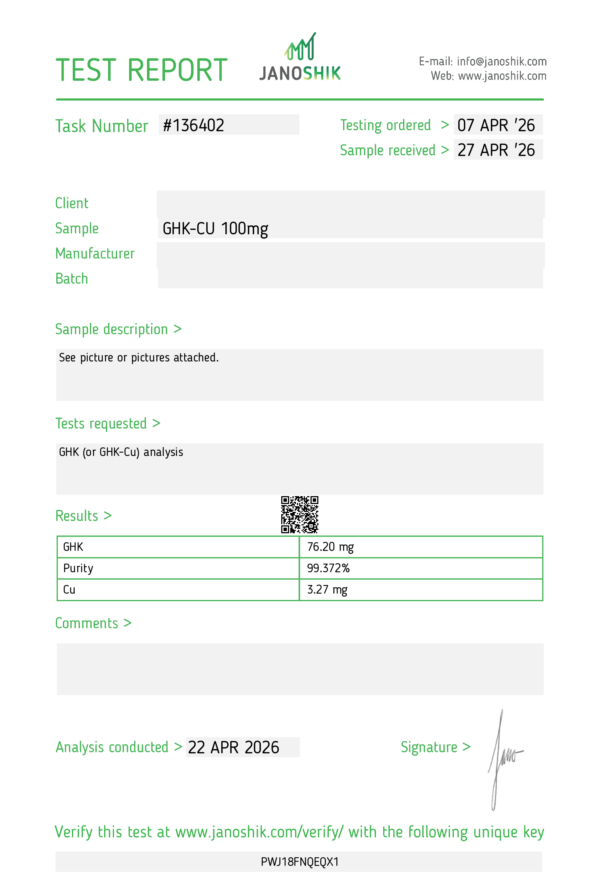
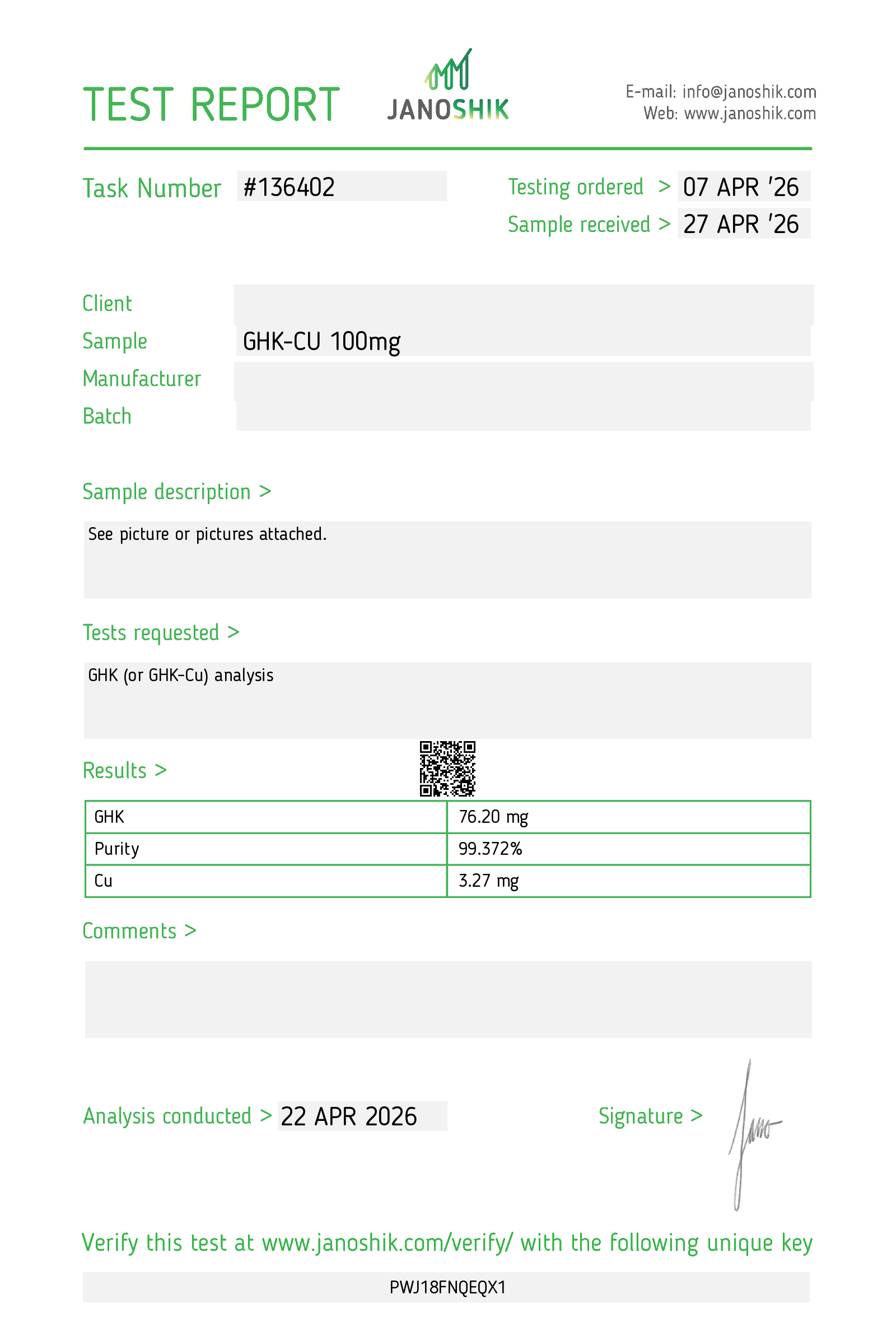
GHK-Cu is one of the most-studied copper peptides in the context of skin and connective tissue. The evidence points to possible involvement in collagen, glycosaminoglycans, fibroblasts and the extracellular matrix [4-8], but most of the knowledge comes from cell studies, animal studies and small clinical studies, and the implication for systemic uses is insufficiently established [9,10]. The material is intended for laboratory research only and not for human use.
Selected Research Sources
- Pickart L., Thaler M.M. Tripeptide in human serum which prolongs survival of normal liver cells and stimulates growth in neoplastic liver. Nature New Biology, 1973. PMID: 4349963
- Schlesinger D.H., Pickart L., Thaler M.M. Growth-modulating serum tripeptide is glycyl-histidyl-lysine. Experientia, 1977. PMID: 858356
- Pickart L. et al. Growth-modulating plasma tripeptide may function by facilitating copper uptake into cells. Nature, 1980. PMID: 7453802
- Maquart F.X. et al. Stimulation of collagen synthesis in fibroblast cultures by the tripeptide-copper complex glycyl-L-histidyl-L-lysine-Cu2+. FEBS Letters, 1988. PMID: 3169264
- Wegrowski Y. et al. Stimulation of sulfated glycosaminoglycan synthesis by the tripeptide-copper complex glycyl-L-histidyl-L-lysine-Cu2+. Life Sciences, 1992. PMID: 1522753
- Pickart L., Vasquez-Soltero J.M., Margolina A. GHK Peptide as a Natural Modulator of Multiple Cellular Pathways in Skin Regeneration. BioMed Research International, 2015. PMID: 26236730
- Maquart F.X. et al. In vivo stimulation of connective tissue accumulation by the tripeptide-copper complex glycyl-L-histidyl-L-lysine-Cu2+ in rat experimental wounds. Journal of Clinical Investigation, 1993. PMID: 8227353
- Campbell J.D. et al. A gene expression signature of emphysema-related lung destruction and its reversal by the tripeptide GHK. Genome Medicine, 2012. NIH.gov
- Badenhorst T. et al. Physicochemical characterization of GHK-Cu for dermal delivery. Pharmaceutical Development and Technology, 2016. PMID: 25384620
- U.S. Food and Drug Administration. Safety risks associated with certain bulk drug substances nominated for use in compounding. Entry for GHK-Cu. FDA.gov



Reviews
There are no reviews yet.