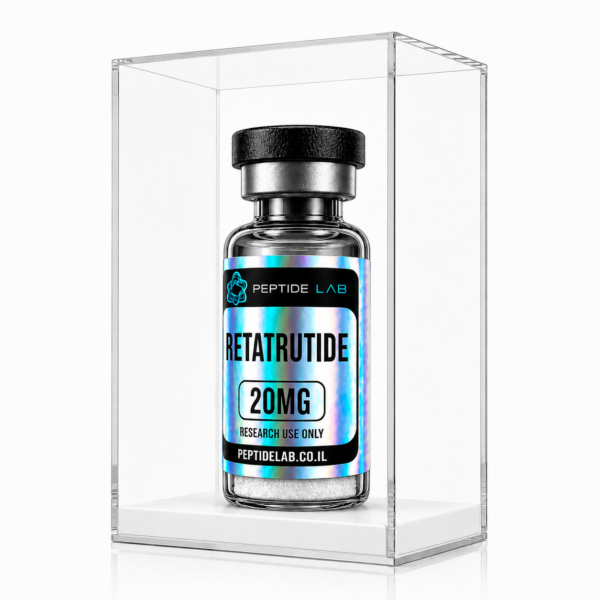
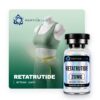
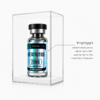
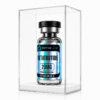
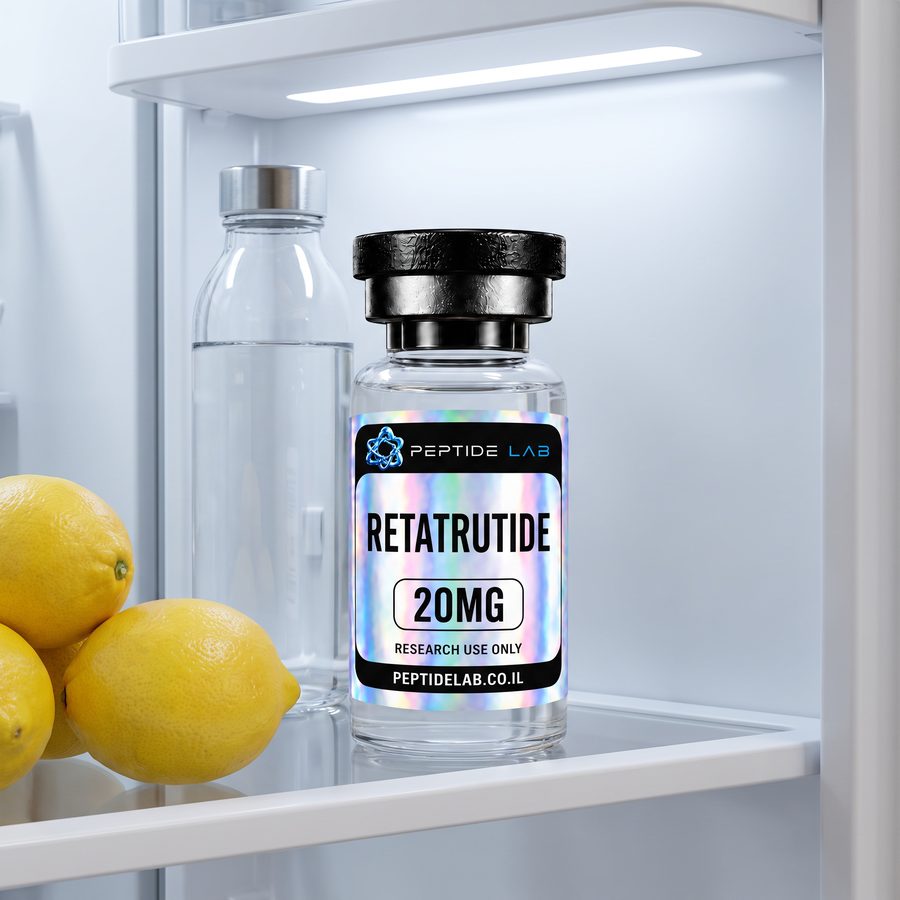
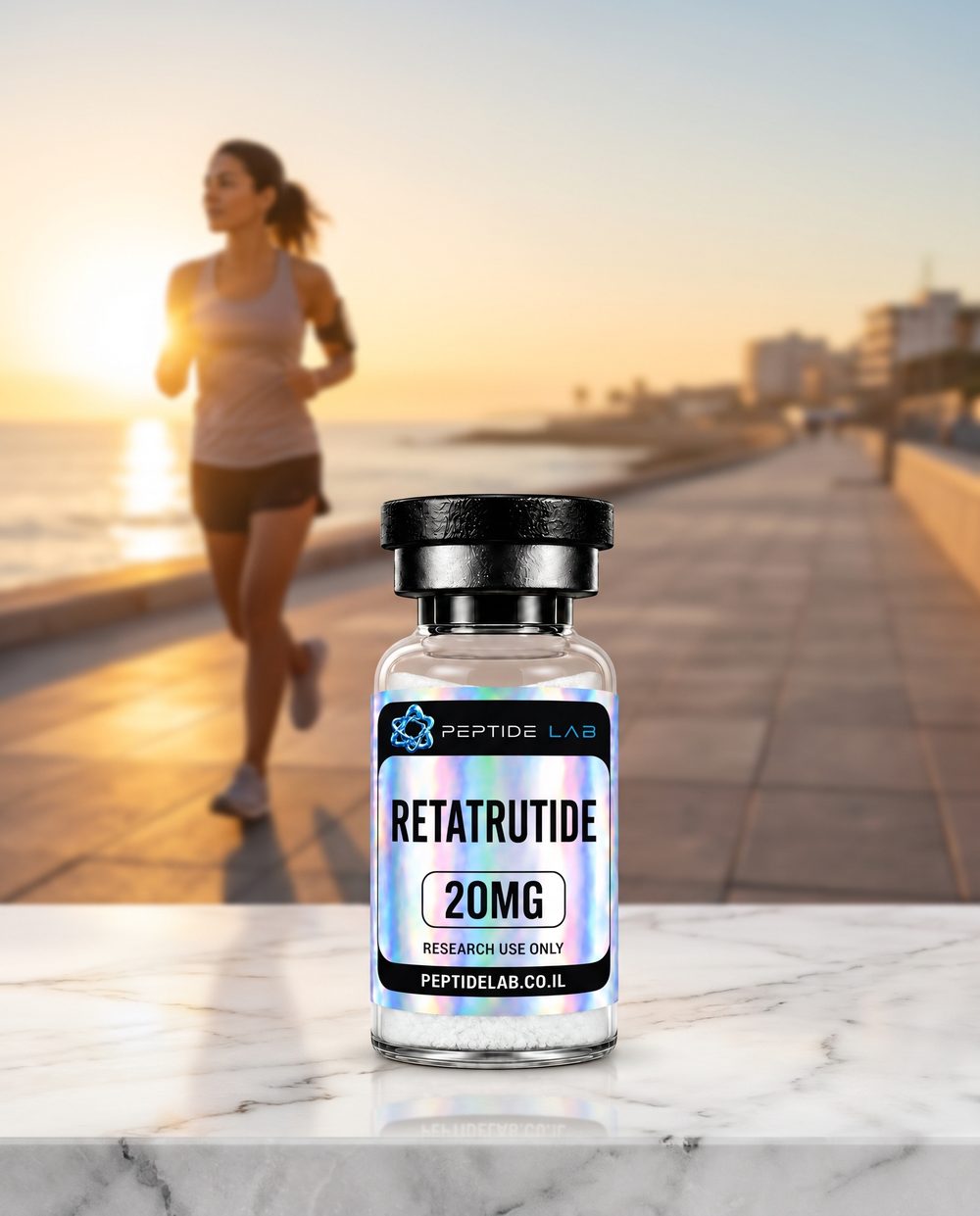
Retatrutide 20mg

699.00 ₪

Rated 4.6 on Google · 10 reviews
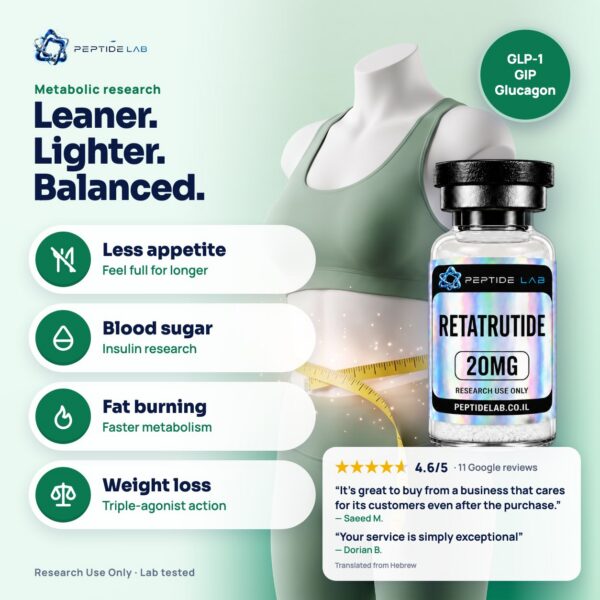
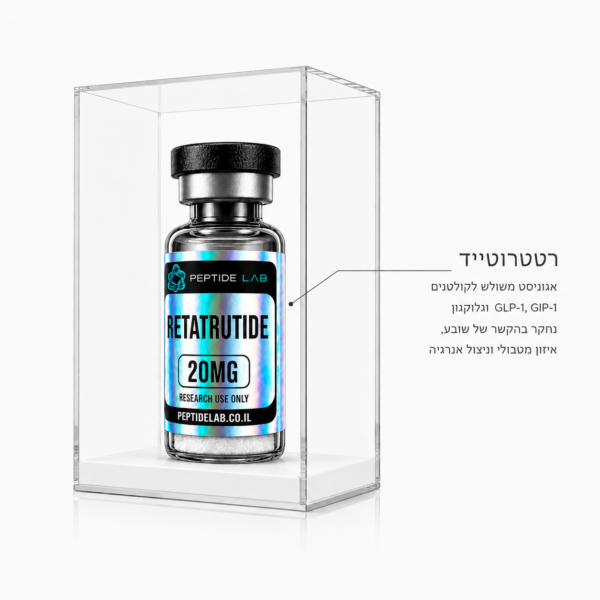
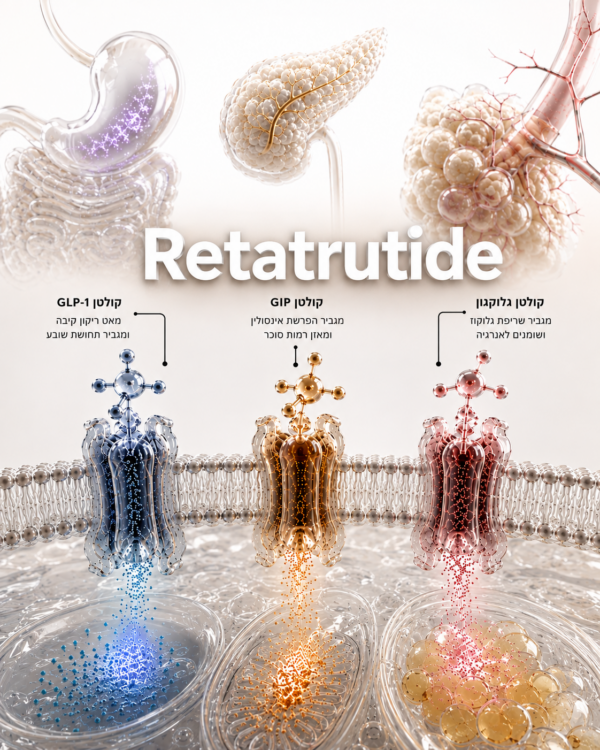
  • Triple agonist: GLP-1, GIP and glucagon in one peptide
  • The easy starting point to get to know Reta
  • Purity above 99%, verified by an independent lab
2 vials last ~4 months · only ₪9.90 /day

Reta (Retatrutide) — the next generation of weight-loss peptides. It works on three pathways at once (GLP-1, GIP and glucagon), and a phase 2 clinical trial recorded an average loss of about 24% of body weight. 20mg, purity above 99%. For research use only.

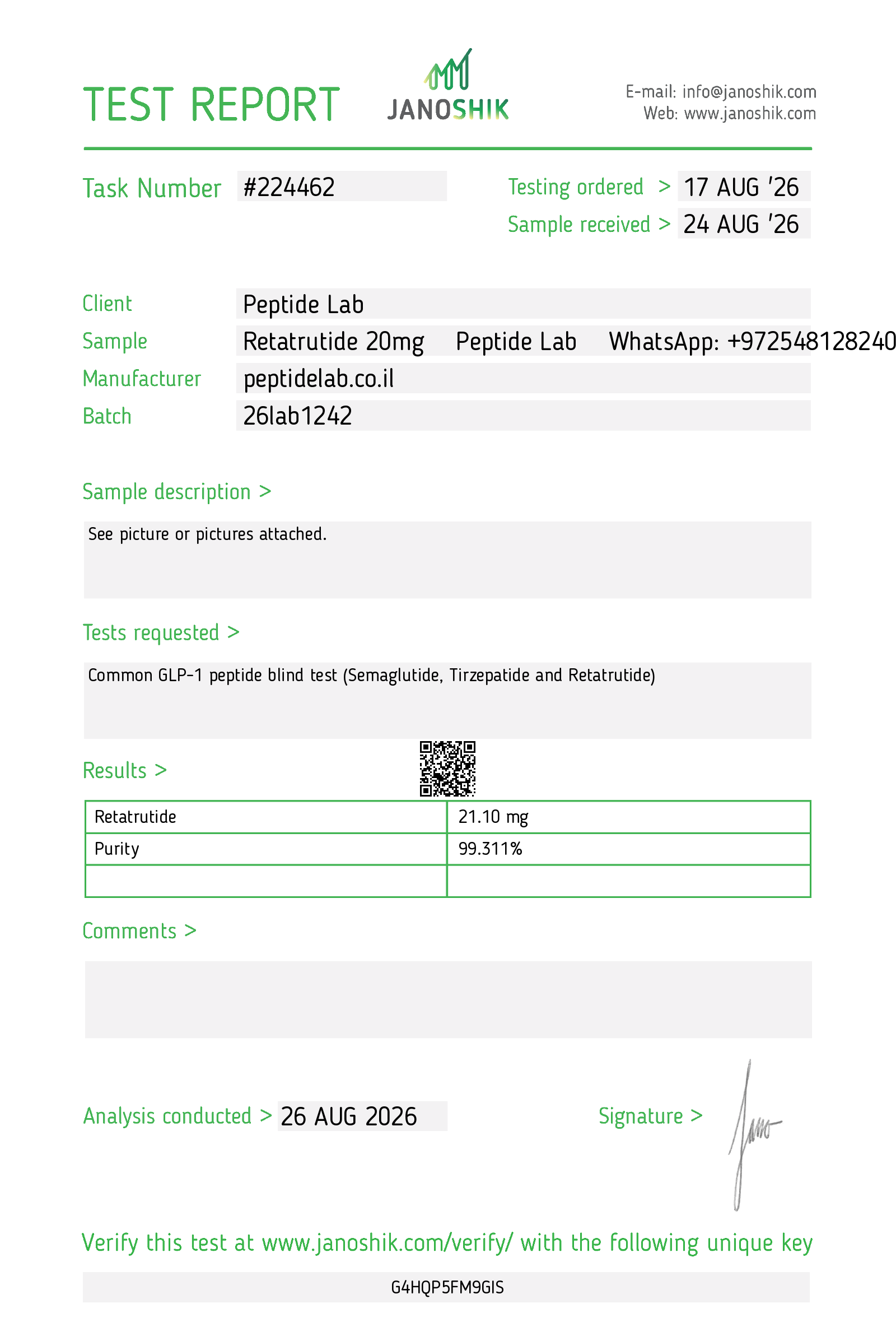
Tested at an independent lab — view the Certificate of Analysis (COA)

In stock

Choose your pack
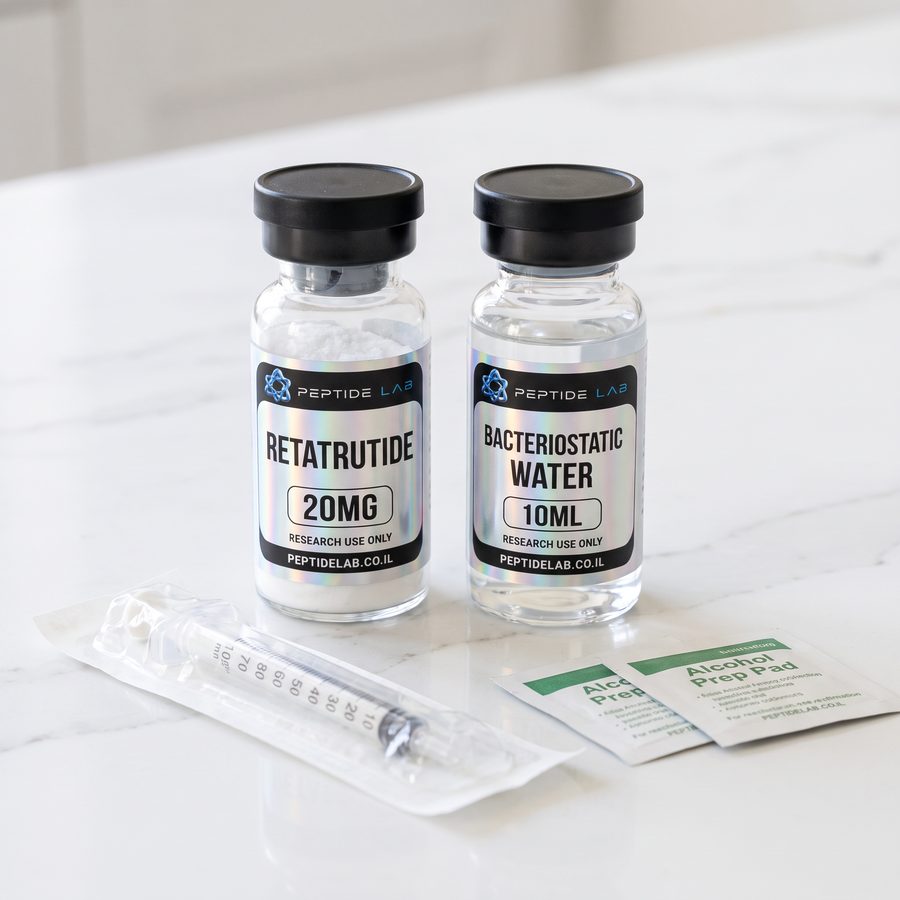
A free prep kit with every order!
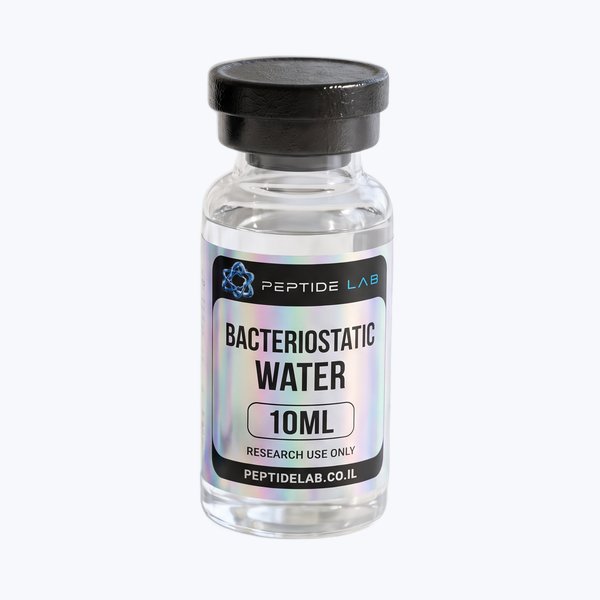
₪99 valueBacteriostatic waterBacteriostatic water
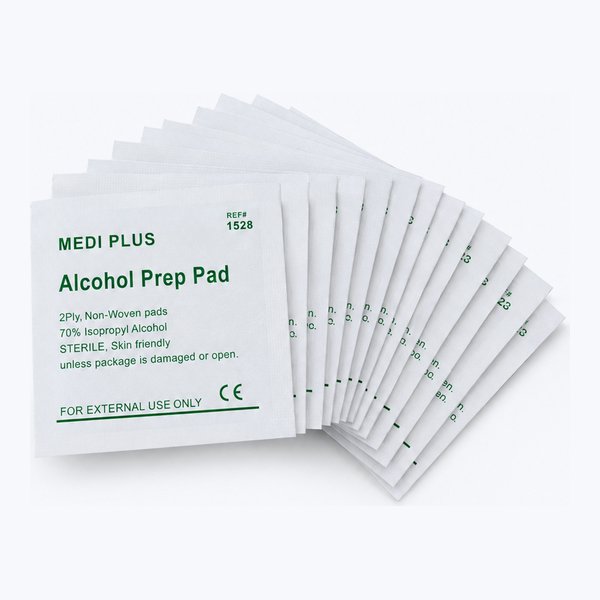
₪10 valueAlcohol prep padsAlcohol prep pads
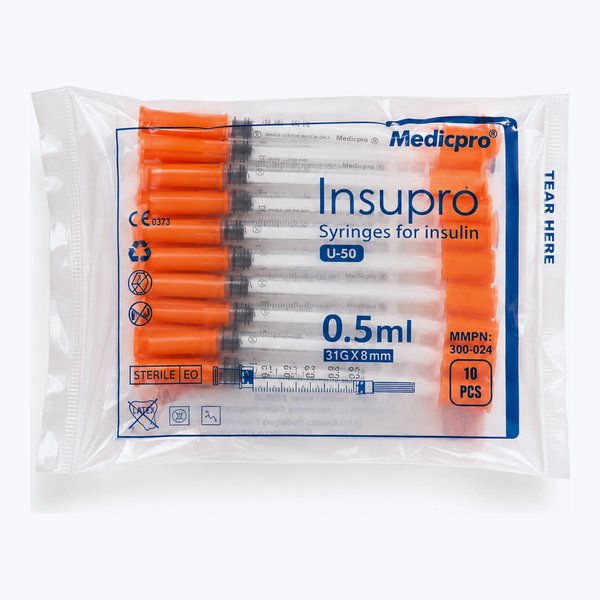
₪10 valueInsulin syringesInsulin syringes
Kit value ₪119 · added to your order automatically
Order now and get it by Tuesday, 3 Nov
Delivery within 3 business days
Purity testing over 99%
Lab-tested in Europe
SKU: retatrutide-20 Categories: ,
Independent lab tested
Purity above 99%
Delivery in up to 3 business days
Personal support on WhatsApp

Ready in 4 simple steps

Preparation takes a minute, and everything you need comes in your free kit.

Prep and sanitise1

Prep and sanitise

A Retatrutide vial and the bacteriostatic water from your free kit. Wipe both stoppers with an alcohol pad.

Draw the water2

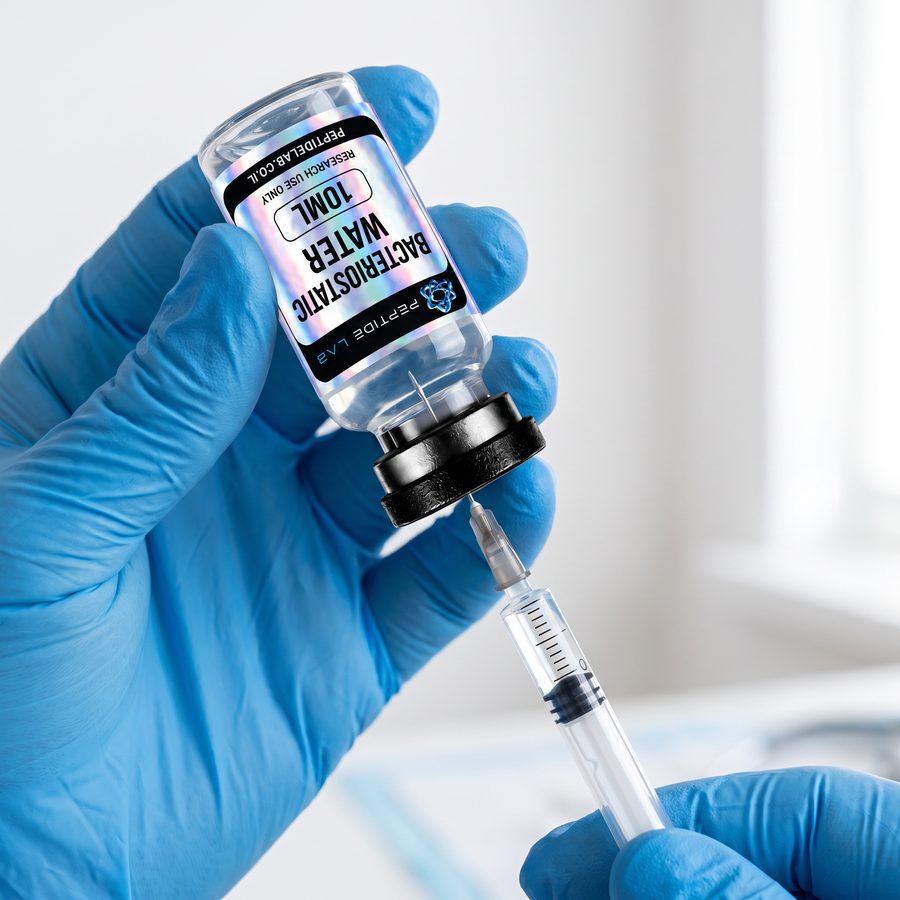
Draw the water

Turn the water vial upside down and draw the amount you need into a sterile syringe.

Add it slowly3

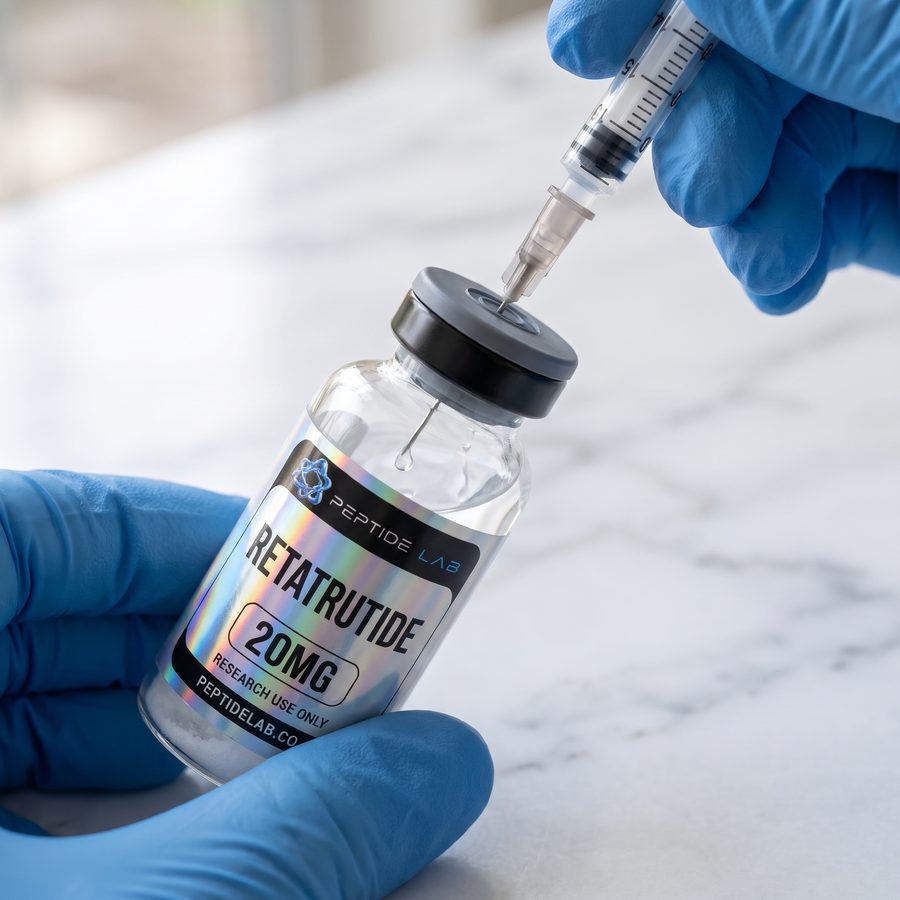
Add it slowly

Let the water run down the inside wall of the Retatrutide vial, never straight onto the powder.

Swirl and refrigerate4

Swirl and refrigerate

Swirl gently until the solution is clear, do not shake. Keep refrigerated (2–8°C).

What Retatrutide 20mg does for you

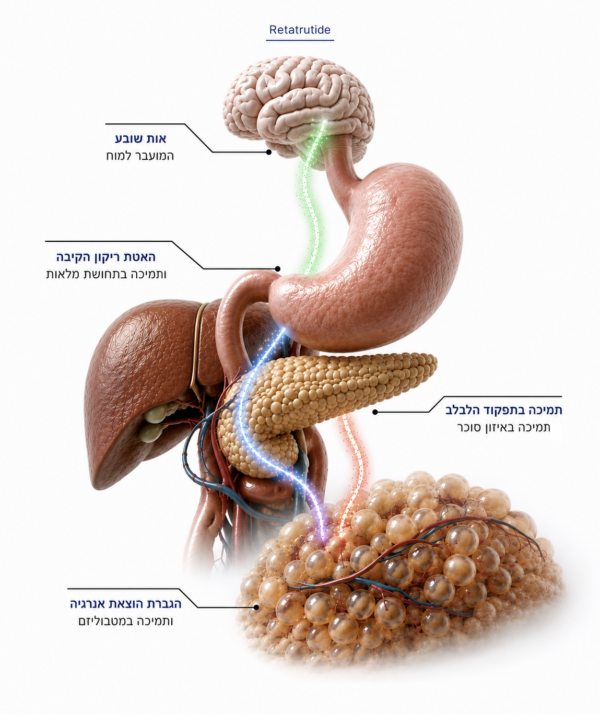
Three pathways, four changes you can feel from the start.

Appetite

Appetite

Fullness that comes sooner
  • GLP-1 and GIP boost the feeling of fullness
  • Fewer cravings between meals
  • Smaller portions feel like enough
Fat burning

Fat burning

The third component that makes the difference
  • The glucagon component is studied for energy expenditure
  • Supports breakdown of stored fat
  • What sets it apart from the previous generation
Blood sugar

Blood sugar

Fewer highs and crashes
  • Studied in the context of blood sugar levels
  • Supports a balanced insulin response
  • Steadier energy through the day
Liver and markers

Liver and markers

Change measured on the inside
  • Studied in the context of liver fat
  • Trials observed improved blood lipids
  • Not just the number on the scale

What happens when you stop fighting hunger

No more willpower alone. Reta works on the pathways that run your appetite.

Constant hunger? Quieted.Fullness that lasts, without counting every bite.
Late-night cravings? Fewer.The fridge stops calling you at 10pm.
Weight stuck? Moving.In the phase 2 trial, average body-weight loss was about 24% over 48 weeks.
Not sure where to start? Right here.20mg is the smaller vial, just right to get to know Reta without committing to a large quantity.
Retatrutide 20mg

Dieting alone? There’s a smarter way to start

Another diet. More hunger. Kilos that come back. Sound familiar?

VS
With RetatrutideDieting alone
Natural fullness that lasts all day
A daily battle with hunger
Three metabolic pathways at once
Willpower only
A start with a small, easy quantity
Another plan dropped after two weeks
Purity above 99% with a lab certificate
Untested products from unknown suppliers

What happens after you order?

Simple, fast, and we are with you all the way.

TodayOrder on the siteSecure payment and instant order confirmation.
Within 3 business daysYour package arrivesNationwide delivery in discreet packaging.
One minutePrepare in 4 stepsBacteriostatic water, a gentle swirl, the fridge.
Any timePersonal supportA question? We are available on WhatsApp.

What our customers say

Rated 4.6 out of 5 · 10 real Google reviews

Personal attention. Professional guidance. All the way through.

Eli EliyaGoogle review

I want to wholeheartedly recommend Peptide Lab. I recently purchased from them and came out super satisfied with the fast delivery and professional response, with an accurate explanation of how to use the product. It's great to buy from a…

saeed mussaGoogle review

We buy from them a lot, we're a group of people and everyone is satisfied. High-level peptides and good service with a fast and professional response. Highly recommended

boldenon boldenonGoogle review

After trying many peptides - your products are the best on the market!!! The results exceed all imagination. Your service is simply exceptional, the patience, the speed of delivery, the constant responsiveness, no one is more satisfied than me!!!!

Dorian BrownGoogle review

Excellent service! Available for any question, polite and professional, and the product definitely meets expectations. Highly recommend!

Muhamad Ali KashkbiagloGoogle review

A trustworthy place, polite and excellent service! High-quality, high-level products! Highly recommended

lena frenkGoogle review

Frequently asked questions

Everything you want to know before you order.

Retatrutide 20mg
What is Reta (Retatrutide)?

An investigational peptide (LY3437943) that acts on three receptors at once: GLP-1, GIP and glucagon. It is seen as the ‘next generation’ after semaglutide and tirzepatide, and in a phase 2 clinical trial average body-weight loss was about 24% over 48 weeks.

20mg or 40mg?

Same molecule, same purity, the only difference is quantity. 20mg suits anyone starting out or working with smaller amounts. If you already know you are in it for the long run, Retatrutide 40mg is better value.

How long does one vial last?

One vial lasts about 2 months. The 2-vial pack lasts about 4 months, and the 3-vial pack about 6 months at the best price.

Is it lab tested?

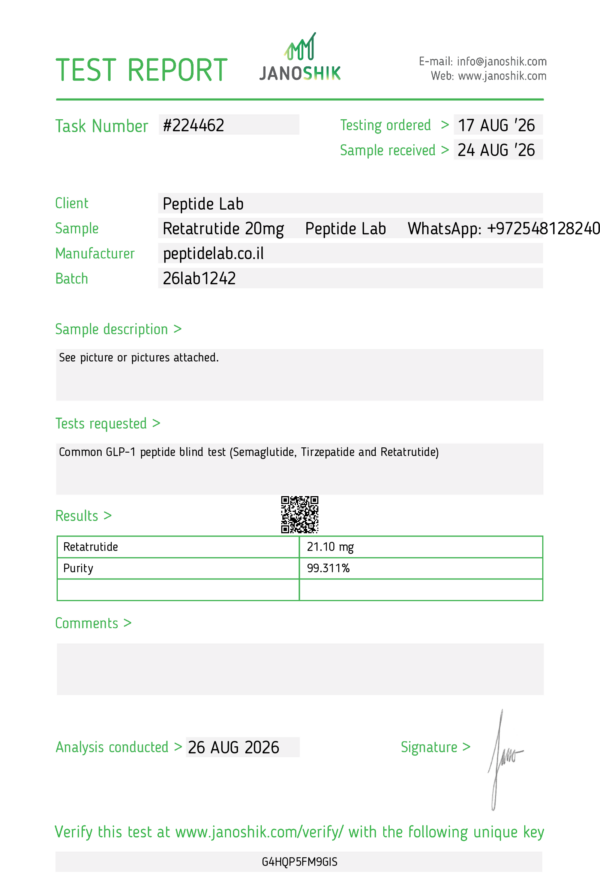
Yes. Every batch is tested by the independent lab Janoshik, and the certificate (COA) is shown on this page with a verification key you can check with the lab.

How long does shipping take?

Up to 3 business days nationwide. Shipping is free on orders over ₪1,300.

How do I prepare and store it?

Slowly add bacteriostatic water down the side of the vial and swirl gently; you can work out the concentration with the reconstitution calculator on the site. Before preparation keep it somewhere cool and away from light, after preparation in the fridge (2–8°C).

What do I get as a gift?

Every peptide order comes with a free prep kit: a 10ml vial of bacteriostatic water, a pack of 50 alcohol pads and a pack of 10 insulin syringes. No code, no minimum.

Is Retatrutide an approved drug?

No. Retatrutide is sold as a research-use-only material, and purchase is permitted from age 18 and up.

All products are intended for laboratory research only. Purchase is permitted from age 18 and up.

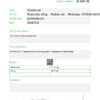
Certificate of Analysis (COA)

Every compound is sent for testing at an independent laboratory. Below is the Certificate of Analysis (COA) from the laboratory of Janoshik for Reta (Retatrutide) — including the compound's identity, the purity percentage and a unique verification key. The certificate can be verified directly with the laboratory on the site janoshik.com/verify.

Certificate of Analysis (COA) for Reta (Retatrutide) — Janoshik Laboratory, including purity percentage and verification key

The test data, purity percentage and verification key are original and unaltered. All products are intended for research use only.

Reta (Retatrutide) is the peptide everyone is talking about — the “next generation” after semaglutide and tirzepatide. While earlier compounds work on one or two pathways, Reta works on three at once: GLP-1, GIP and glucagon. This vial contains 20mg of high-purity freeze-dried powder.

What does Reta offer?

  • Significant weight loss — a phase 2 clinical trial recorded an average loss of about 24% of body weight within 48 weeks, one of the highest results ever seen in the field.
  • Appetite control — activating the GLP-1 and GIP pathways increases satiety and reduces hunger and cravings.
  • Enhanced fat burning — the glucagon component boosts energy expenditure and fat breakdown, including liver fat.
  • Better metabolic markers — trials observed improvements in blood sugar, blood pressure and blood lipids.

Retatrutide 20mg or 40mg?

Exactly the same molecule and the same purity — the only difference is the amount. 20mg suits those starting out or working with smaller quantities, andRetatrutide 40mg is better value for those who need a larger amount over time.

Why buy Reta from PeptideLab?

  • Purity above 99% — every batch is tested by an independent lab (Janoshik), and the certificate is shown on this page.
  • Fast shipping — up to 3 business days, nationwide.
  • Personal service — have a question? We are available on WhatsApp.
  • Freeze-dried powder — stable and long-lasting.

To reconstitute the powder you will need bacteriostatic water, and you can easily work out the concentration with thereconstitution calculator.

FAQ — Retatrutide 20mg

What is Reta (Retatrutide)?
A new-generation peptide (LY3437943) developed by Eli Lilly that acts on three receptors — GLP-1, GIP and glucagon — for weight loss and better metabolism. More in thefull guide.

What is the difference between 20mg and 40mg?
Only the amount in the vial — same molecule, same purity. The40mg vial contains double the amount.

How do I reconstitute the powder?
Add bacteriostatic water according to the desired concentration; for an exact calculation use thereconstitution calculator.

Is Reta approved?
No. It is currently in clinical research (phase 3) and is not approved for marketing as a drug — for research only.

Is there a lab test (COA)?
Yes. See the lab-test panel on this page, and the lab tests page for all products.

To complete the protocol you can add bacteriostatic water for reconstitution, and browse moreWeight-loss peptides in the catalog.

Want to dive into the science? All the studies are in the “Additional information” tab and onPubMed.

Disclaimer: all products are intended for laboratory research only. Purchase is permitted from age 18 and up.

Overview

Retatrutide, also known by the research name LY3437943, is an investigational peptide that acts as a triple agonist of the GLP-1, GIP, and glucagon receptors. It was developed as part of the new generation of incretin and metabolic drugs, whose aim is to affect appetite, insulin secretion, body weight, and energy expenditure in parallel [1,2]. The distinctive feature of Retatrutide is that it is not a GLP-1 agonist alone, and not merely a dual agonist like drugs acting on GLP-1 and GIP. It also adds activity at the glucagon receptor, which produces a more complex biological profile. Glucagon is known mainly as a hormone that raises blood glucose, but activation of its receptor may also be associated with increased energy expenditure and with changes in lipid metabolism [1,2]. As of June 2026, Retatrutide is in advanced clinical development, with Phase 2 studies published in 2023 and a Phase 3 study in type 2 diabetes published in 2026 [1-3]. This means that there is more substantial clinical literature than for many other research peptides, but a distinction is still required between trial results and approval and broad clinical use.

Biological Mechanism

GLP-1 is an incretin hormone secreted after a meal and involved in enhancing glucose-dependent insulin secretion, suppressing postprandial glucagon, slowing gastric emptying, and increasing satiety. GIP is another incretin that affects insulin secretion and beta-cell function, and it also has effects in adipose tissue and in the broader metabolic system [1,2]. The glucagon receptor adds a further layer. On one hand, glucagon increases glucose production in the liver. On the other hand, controlled activation of the glucagon pathway may increase energy expenditure, affect liver fat, and contribute to weight loss when it is combined with GLP-1 and GIP activity [1,2]. The triple combination is intended to create a balance between reduced appetite, improved glycemic control, and an effect on metabolism. However, such a mechanism is not simpler than the GLP-1 mechanism, but rather more complex. Therefore, long-term studies are required to assess not only weight loss and HbA1c, but also cardiac, hepatic, pancreatic, and metabolic safety.

Research Evidence

In a Phase 2 study published in the New England Journal of Medicine in 2023, Retatrutide was examined in adults with obesity. After 48 weeks, significant weight loss was reported, with a dose-dependent effect of high magnitude relative to previous generations of incretin drugs [1]. The study established Retatrutide as one of the leading candidates in the field of metabolic treatment, but the follow-up duration and sample size were still an intermediate stage in development. In another Phase 2 study published in the Lancet in 2023, Retatrutide was examined in patients with type 2 diabetes. The study showed improvement in HbA1c and weight loss, alongside side effects mainly of the gastrointestinal system, similar to the pattern known in the family of incretin agonists [2]. In 2026, a Phase 3 study of the TRANSCEND-T2D-1 type was published in the Lancet, examining Retatrutide in patients with type 2 diabetes. The study presented significant improvement in glycemic control and body weight, and added an important clinical layer beyond the Phase 2 studies [3]. At the same time, questions about persistence over years, cardiovascular outcomes, rare effects, and the effect after treatment discontinuation require further follow-up.

Advanced Clinical Development and the Current Evidence Picture

Beyond the Phase 2 studies, Retatrutide advanced to a broad Phase 3 program. TRIUMPH-1 was registered as a Phase 3 study in participants with obesity or overweight, including subpopulations with obesity-related complications [5]. Company data published in 2026 described significant weight loss in this study, but it is important to distinguish between a company's initial announcement and a full peer-reviewed article [6]. TRIUMPH-4 examined a specific population of participants with obesity or overweight together with osteoarthritis of the knee [7]. The preliminary data emphasized not only weight loss, but also improvement in pain and function according to WOMAC measures. Cautious interpretation should take into account that part of the improvement in pain may result from a reduction in the mechanical load on the knee, and not necessarily from direct anti-inflammatory activity of the molecule. This distinction is important because it separates a systemic metabolic effect from a direct effect on joint tissue. Another area is MASLD, a fatty liver disease associated with metabolic disorder. In a Phase 2a study published in Nature Medicine, it was found that Retatrutide reduced liver fat on a research measurement, and the reduction was associated with changes in weight, abdominal fat, and metabolic measures [4]. This finding fits the biological rationale of triple agonism, because the liver is a central organ in the glucagon, lipid, and insulin-sensitivity pathways. A significant difference between Retatrutide and many other research peptides is the depth of the clinical program. There are randomized controlled trials in humans, including Phase 2 and Phase 3 [1-3,5]. At the same time, even in an advanced clinical program there are questions that require time: the effect after treatment discontinuation, preservation of lean body mass, cardiovascular outcomes, liver and pancreas function, uncommon neurological effects, as well as patterns of persistence and tolerability in a broad population. Therefore, the value of Retatrutide today lies in the combination of strong clinical results and the need to complete regulatory follow-up and full publication of all outcomes.

Safety & Limitations

The common side effects in studies on Retatrutide were mainly in the gastrointestinal system, including nausea, diarrhea, vomiting, and constipation [1,2]. In some studies, changes in heart rate or additional metabolic measures were also reported, and therefore the safety assessment is not limited only to gastrointestinal tolerability. Activity at the glucagon receptor requires special attention. Although the combination with GLP-1 and GIP may balance some of the effects on glucose, glucagon is a central metabolic pathway in the liver. Therefore it is important to assess over time the effects on glucose, liver, lipids, appetite, lean body mass, and cardiovascular systems. At this stage, Retatrutide presents impressive clinical data, but it still requires regulatory evaluation and long-term follow-up. Large studies can identify rare or late effects that do not necessarily appear in Phase 2 studies or in early Phase 3 studies.

Interpretation Limits Between Research and Drug Development

Retatrutide is in a different situation from most of the research peptides on the list, because it has a broad clinical program and randomized trials in humans [1-5]. However, here too a distinction must be made between efficacy on intermediate measures and a full understanding of long-term benefit. Weight loss, reduction in HbA1c, and reduction in liver fat are significant results, but regulators and health systems also examine cardiac safety, effects on the gallbladder, pancreas, heart rate, kidney function, lean body mass, and rare events. The addition of glucagon receptor agonism is a possible biological advantage, but also a source of questions. Glucagon is involved in glucose production in the liver, in the use of lipids, and in energy expenditure. When it is combined with GLP-1 and GIP, stronger weight loss may be obtained, but it must be ensured that metabolic balance is maintained over time [1,4]. Another question is what happens after significant weight loss. Future studies need to assess weight maintenance, appetite, nutrition, muscle mass, bone density, and quality of life. Therefore, Retatrutide is an example of a peptide where the problem is not a complete absence of evidence, but rather the need to follow a potent molecule for enough time to understand the full benefit-risk profile.

Summary

Retatrutide is a triple agonist of the GLP-1, GIP and glucagon receptors, and it represents an advanced direction in the research of obesity and type 2 diabetes [1-3]. The clinical data published to date are presented as research background only; Retatrutide is an experimental substance that is not approved for marketing. Its complex biological profile requires broad and prolonged monitoring, and its central value today lies in demonstrating a research direction of a multi-pathway metabolic effect, alongside a continued need for safety and regulatory assessment.

Selected Research Sources

  1. Jastreboff A.M. et al. Triple-Hormone-Receptor Agonist Retatrutide for Obesity. New England Journal of Medicine, 2023. PMID: 37366315
  2. Rosenstock J. et al. Retatrutide for type 2 diabetes: a randomised, double-blind, placebo and active-controlled, parallel-group, phase 2 trial. Lancet, 2023. PMID: 37385280
  3. Bajaj H.S. et al. Efficacy and safety of retatrutide in people with type 2 diabetes, TRANSCEND-T2D-1. Lancet, 2026. PMID: 42250575
  4. Sanyal A.J. et al. Triple hormone receptor agonist retatrutide for metabolic dysfunction-associated steatotic liver disease: a randomized phase 2a trial. Nature Medicine, 2024. NIH.gov
  5. ClinicalTrials.gov. TRIUMPH-1, A Study of Retatrutide (LY3437943) in Participants Who Have Obesity or Overweight. NCT05929066. clinicaltrials.gov
  6. Eli Lilly and Company. Retatrutide delivered powerful weight loss in pivotal Phase 3 obesity trial, TRIUMPH-1. May 21, 2026. gcs-web.com
  7. Eli Lilly and Company. Retatrutide delivered weight loss and relief from osteoarthritis pain in Phase 3 TRIUMPH-4. December 11, 2025. lilly.com
  8. Eli Lilly and Company. Retatrutide drove improvements in weight, A1C, knee osteoarthritis pain and obstructive sleep apnea. June 6, 2026. lilly.com

Skip to content